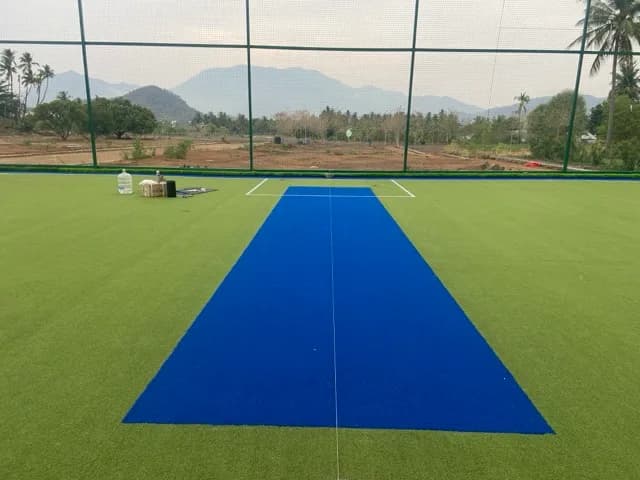
Cricket Turf
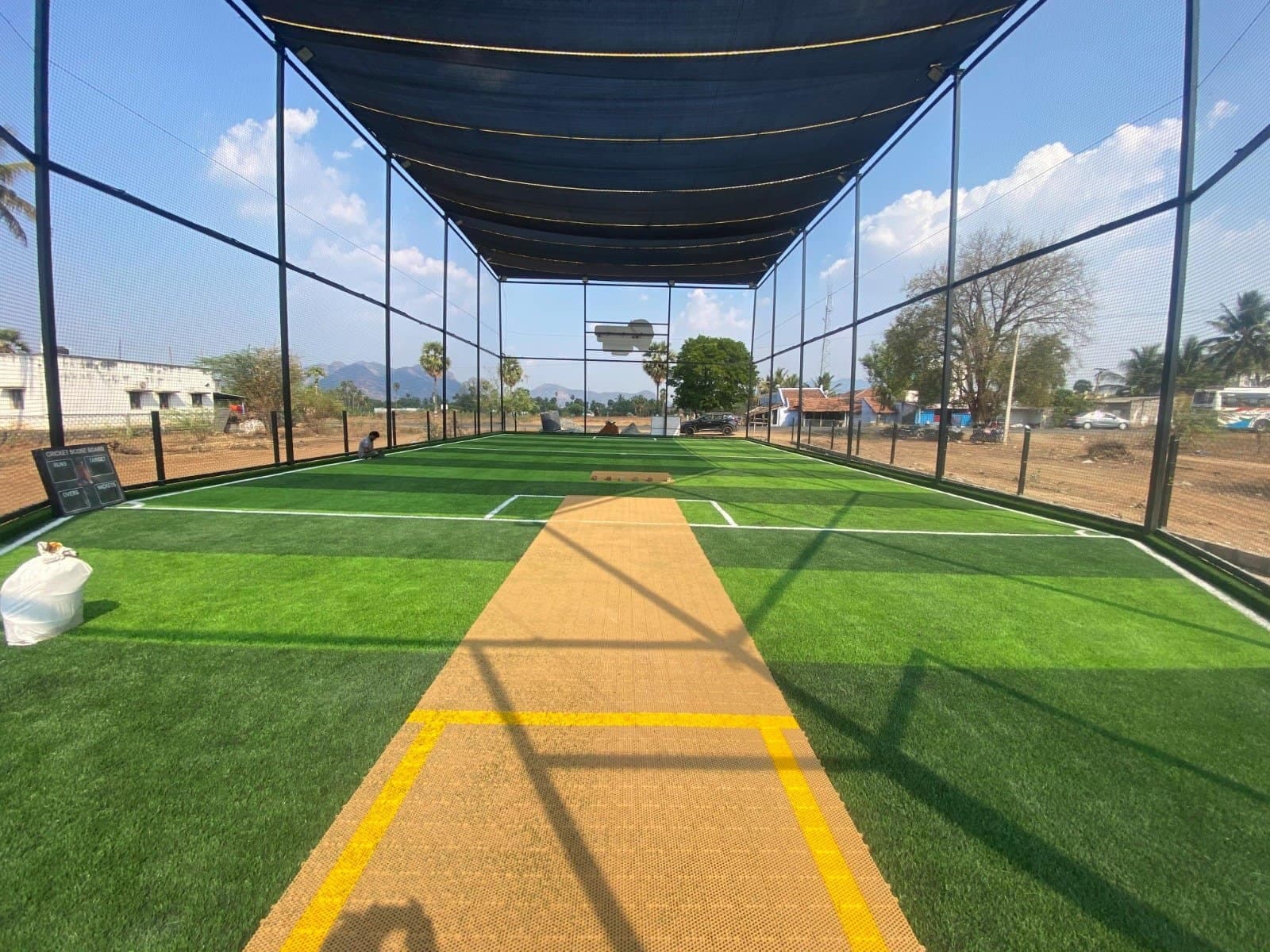
- 9 mm short-pile turf for the pitch
- Even pace and bounce, session after session
- Firm underfoot for run-ups and the bowling action
- Drains fast, so the wicket stays usable after rain
MCC Laws of Cricket
World-Class Cricket Pitches, Nets, and Practice Mats by Fitoverse
Updated
Quick answerA cricket pitch is 66 × 10 ft (20.12 × 3.05 m) stump to stump. A practice net lane is 79–120 × 12 ft (typically 90 × 12 ft), and a standard box-cricket turf about 120 × 80 ft. Fitoverse builds pitches, practice nets and box-cricket turfs on a firm base with short-pile cricket turf. Fitoverse, a turf construction company with offices in Salem, Chennai and Bangalore, builds cricket turfs and nets across India.
About cricket
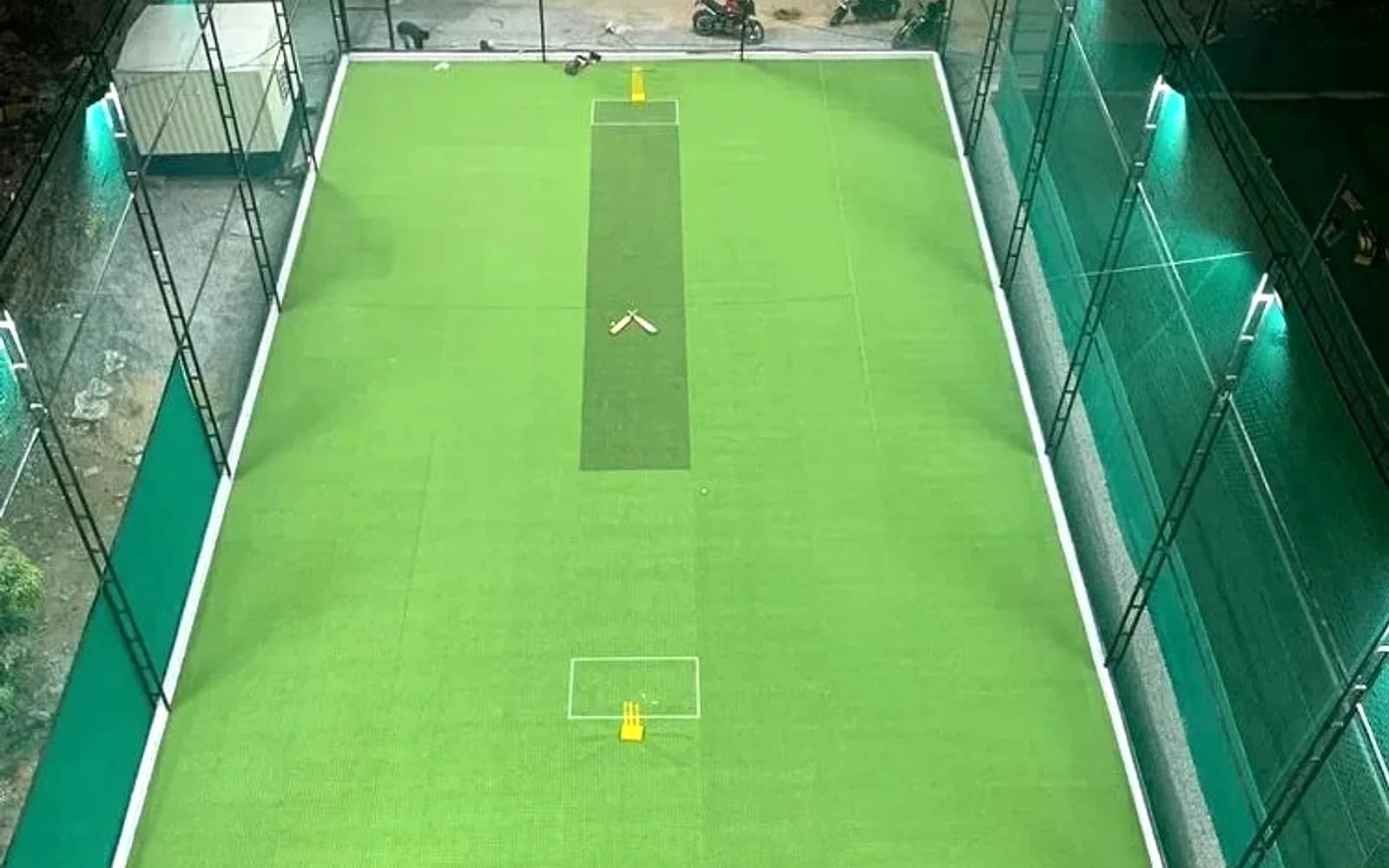
Fitoverse builds box cricket turfs, practice net lanes and cricket pitches for turf owners, schools and academies. We lay short-pile cricket turf on a firm base and add ball-stop netting and floodlights for box turfs. Recent work: the netted box cricket turf at Turf RNA, Salem.
| Format | Dimensions | Area |
|---|---|---|
| PitchStump to stump | Keep at least 6.5 ft behind each stump | 66 × 10 ft (20.12 × 3.05 m) | |
| Practice net — 1 lanePitch 66 ft + run-up | 79–120 × 12 ft (24–36.6 × 3.66 m) | Typical 90 × 12 ft |
| Practice nets — 4 lanesLanes side by side, 12 ft each | 79–120 × 48 ft (24–36.6 × 14.6 m) | Typical 90 × 48 ft |
| Box cricket — mini4-a-side, tennis-ball | 66–82 × 40–50 ft (20–25 × 12–15 m) | Typical 75 × 45 ft |
| Box cricket — small4–6 a side | 82–100 × 50–66 ft (25–30 × 15–20 m) | Typical 90 × 60 ft |
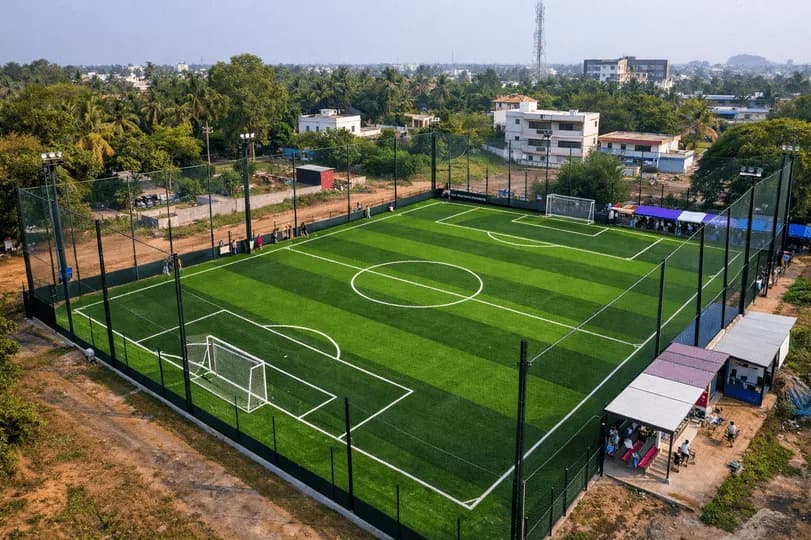
| Box cricket — standard6–8 a side; doubles as a 5-a-side football turf | 100–131 × 66–82 ft (30–40 × 20–25 m) | Typical 120 × 80 ft |
| Box cricket — large8–11 a side | 131–180 × 82–115 ft (40–55 × 25–35 m) | Typical 150 × 100 ft |
| Box cricket — XL / 2 pitchesTwo games or 11-a-side | 180–230 × 115–150 ft (55–70 × 35–45 m) | Typical 200 × 130 ft |

A full pitch is 20.12 m × 3.05 m (22 yards between the stumps), about 661 sq ft.
One net lane is 79–120 ft long and 12 ft wide (24–36.6 × 3.66 m), typically 90 × 12 ft, which covers the 66 ft pitch and the bowler's run-up; a longer lane gives a fast bowler a longer run-up. Lanes sit side by side: 4 lanes are about 90 × 48 ft.
Box cricket has no governing-body size. Fitoverse builds from a 75 × 45 ft mini box (4-a-side) to 200 × 130 ft for two games; the most common standard box is 120 × 80 ft, which also works as a 5-a-side football turf.
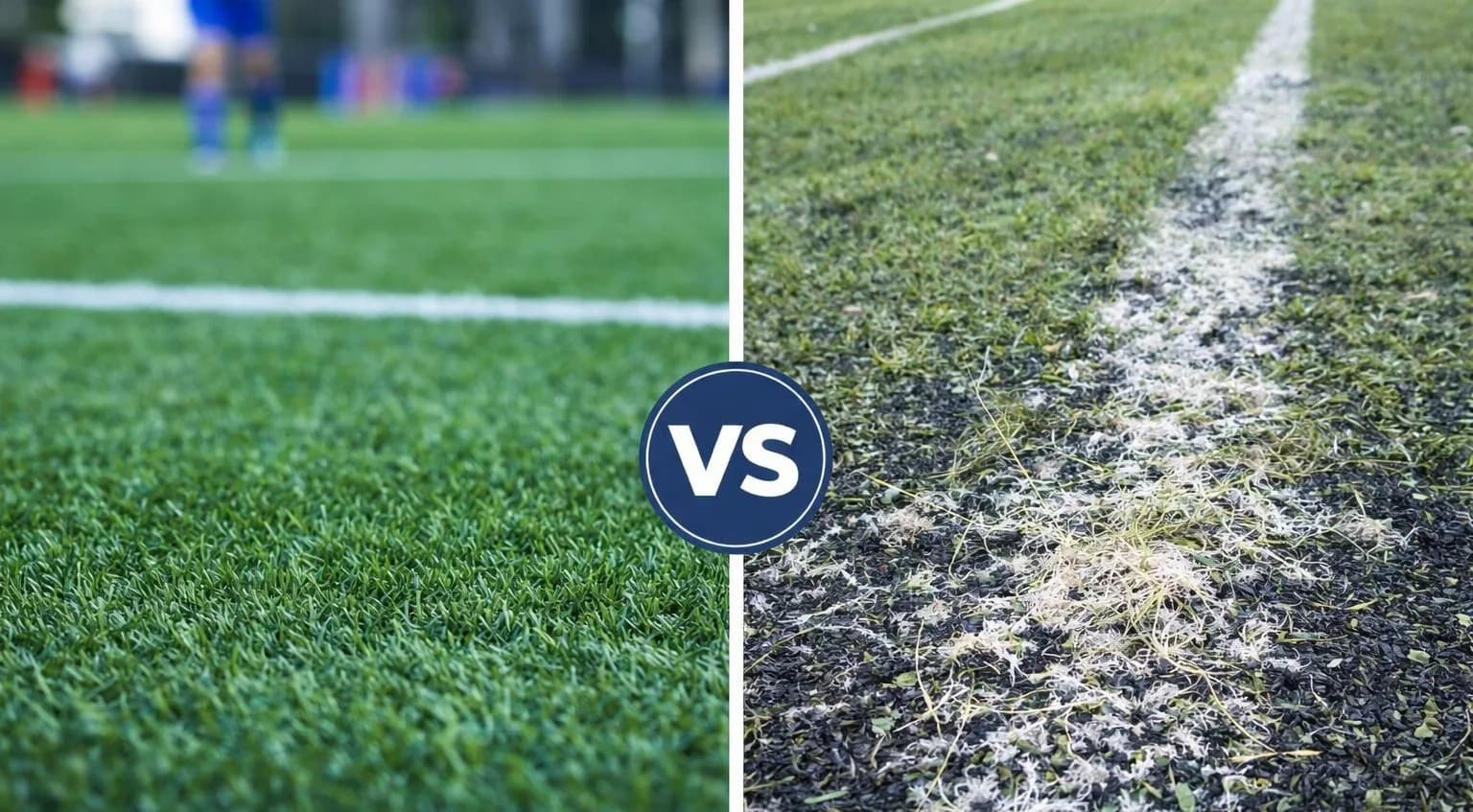
A shorter, denser cricket turf over a firm base keeps run-ups stable and the bounce consistent. Multi-sport turf works where the same area also hosts football.
Yes, if it is built with drainage under the base — we design for the wicket to stay usable after rain.
All over India, with a focus on Tamil Nadu, Karnataka, Kerala and Andhra Pradesh. Fitoverse's head office is in Salem, with offices in Chennai and Bangalore (Bengaluru).
Where we build: Tamil Nadu, Karnataka, Kerala and Andhra Pradesh — and all over India.