
Sports · 3 min read · By Vignesh Manikandan
Published
Sports Turf Maintenance Guide: Why It Matters and What Most Owners Get Wrong
Ignoring turf maintenance doesn’t save money it costs more. Find out how proper upkeep can extend turf life, improve player experience, and protect your revenue.
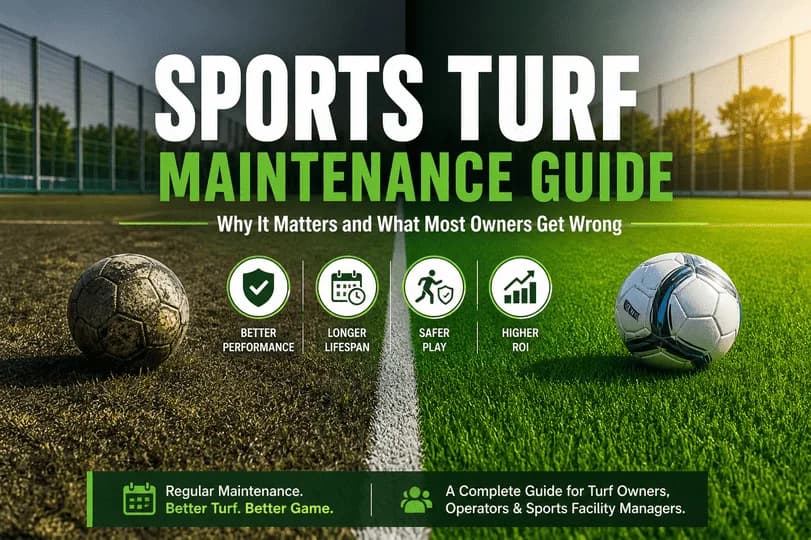
In short: Artificial turf needs regular maintenance to stay safe and last: keeping the silica sand and rubber infill topped up, caring for high-wear zones such as the cricket pitch area and line markings, and checking the nets. Owners can choose quarterly (AMC), twice-yearly or one-time maintenance.
Introduction
One of the biggest gaps we see in the sports infrastructure industry is maintenance.
From our experience, nearly 70% of turf owners are not fully aware of the importance of maintenance.
At the same time, many vendors who build the turf do not provide proper guidance after project completion.
Because of this lack of awareness, many turfs lose quality very quickly, even with minimal usage.
Maintenance is not optional.
It is one of the most important factors that determines the performance, safety, and lifespan of a sports turf.
The Real Problem: Lack of Awareness
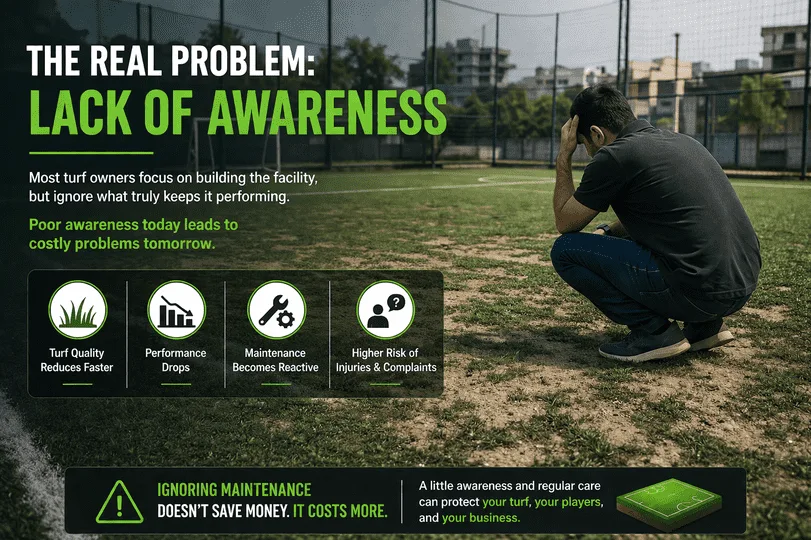
Most turf owners focus on building the facility.
But very few understand what is required to maintain it.
Due to this:
- turf quality reduces faster
- performance drops
- maintenance becomes reactive instead of planned
This is not because owners are not willing to maintain
it is mainly because they are not informed properly.
What Happens When Turf Is Not Maintained
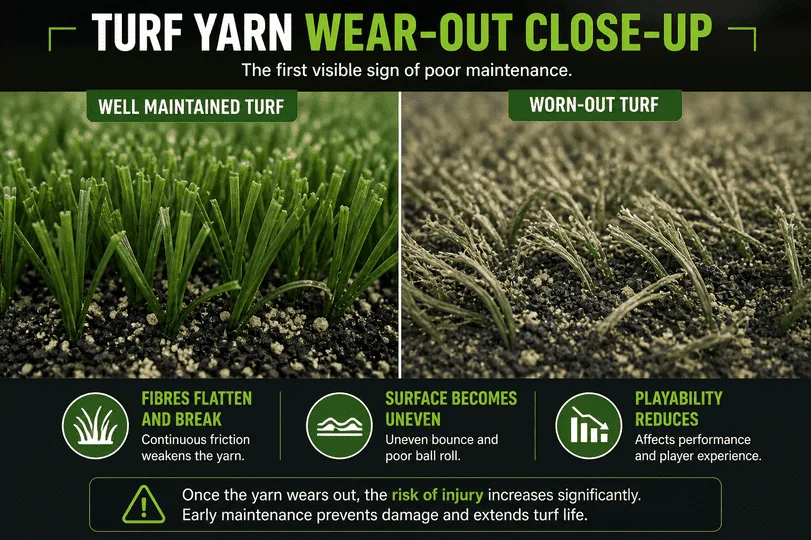
When maintenance is ignored, the first visible issue is turf yarn wear-out.
As the turf starts wearing out:
- the fibers flatten and break
- the surface becomes uneven
- playability reduces
This creates a serious problem.
Because once the yarn wears out, players are at higher risk of injury.
Role of Infill in Player Safety
One of the most important but ignored components is infill material.
A standard turf system includes:
- silica sand
- rubber infill
Each plays a critical role:
Silica Sand
- protects the turf fibers
- helps maintain structure
Rubber Infill
- absorbs impact
- reduces stress on players
- prevents injuries
Over time, due to usage:
- infill levels reduce
- distribution becomes uneven
This is why regular refilling and brushing are essential.
If this is skipped:
- turf quality drops
- surface becomes hard
- injury risk increases
High-Wear Zones in Turf
Certain areas in a turf wear out faster than others.
The most common ones are:
Cricket Pitch Area
- high impact due to bat usage
- repeated ball contact
- faster surface damage
Line Markings
- white turf fibers wear out quickly
- visual quality reduces
Alternate Solution
Some facilities now use painted line markings instead of white turf.
- paint lasts longer
- reduces frequent replacement
However:
- white turf gives a more natural playing feel
- both options have their use case
Net Maintenance
Maintenance is not limited to the turf surface.
The netting system also requires attention.
Common issues:
- nets becoming loose over time
- expansion due to weather conditions
- players leaning on nets
This leads to:
- reduced safety
- poor facility experience
Regular inspection and tightening of nets is important to maintain quality.
Maintenance Options Available
There are different ways turf owners can approach maintenance.
1. Quarterly Maintenance (AMC)
- 3 times a year
- best for high-usage facilities
2. Bi-Annual Maintenance
- 2 times a year
- suitable for moderate usage
3. One-Time Service
- used as a starting point
- helps owners understand maintenance impact
After one service, most owners can clearly see the difference in:
- playability
- surface quality
- overall experience
Maintenance Is Not a Cost. It Is a Saving.
Many owners see maintenance as an extra expense.
But in reality, it is the opposite.
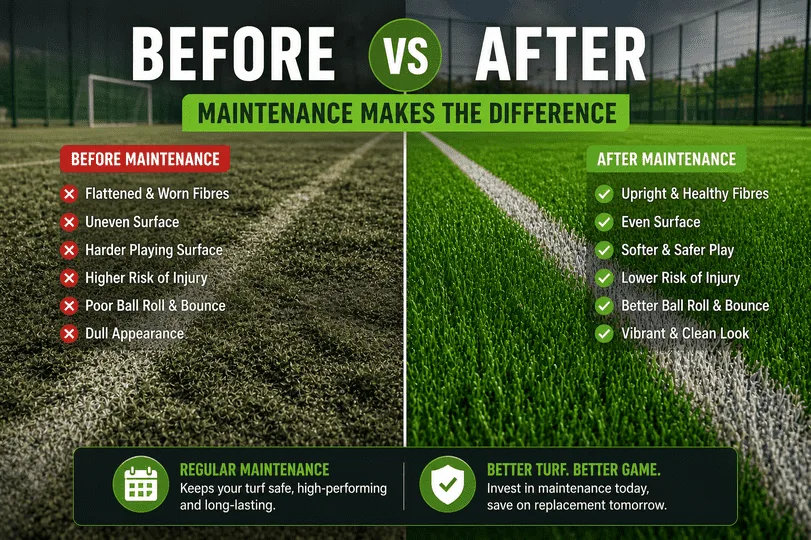
Proper maintenance can:
- extend turf lifespan by up to 2–3 years
- reduce long-term costs
- delay full turf replacement
Without maintenance:
- turf wears out early
- replacement cost increases
- business performance drops
In addition:
- poor turf quality affects player experience
- safety issues increase
- regular users may stop coming
So maintenance is not just about the turf.
It directly impacts revenue, safety, and customer retention.
Final Thought
A sports turf is not a one-time investment.
It is an ongoing system that requires regular care.
Maintaining your turf properly ensures:
- better performance
- longer lifespan
- safer gameplay
- better user experience
A Better Way to Manage Turf Maintenance (Coming Soon)
To solve this problem, we are introducing a new feature.
Through our upcoming platform, you will be able to:
- connect with professional turf maintenance providers
- access quality services
- get better pricing
- ensure proper upkeep of your facility
This will help turf owners maintain their facilities with the right support.
We Will Share More
In upcoming blogs, we will cover:
- step-by-step turf maintenance checklist
- how to identify turf damage early
- cost of turf maintenance
Follow us for more real insights from the sports infrastructure industry.